1 January 2021
cpp -- Pointers and Dynamic Memory Management(1)
by Jerry Zhang
Pointer Basics
A pointer variable holds the memory address. Through the pointer, you can use the dereference operator * to access the actual value at a specific memory location.
一般来说,一个变量中存的是一个具体的值,比如一个整数,一个浮点数。而pointer存的是一个变量的内存地址。
声明指针的方法:
dataType* pVarName;
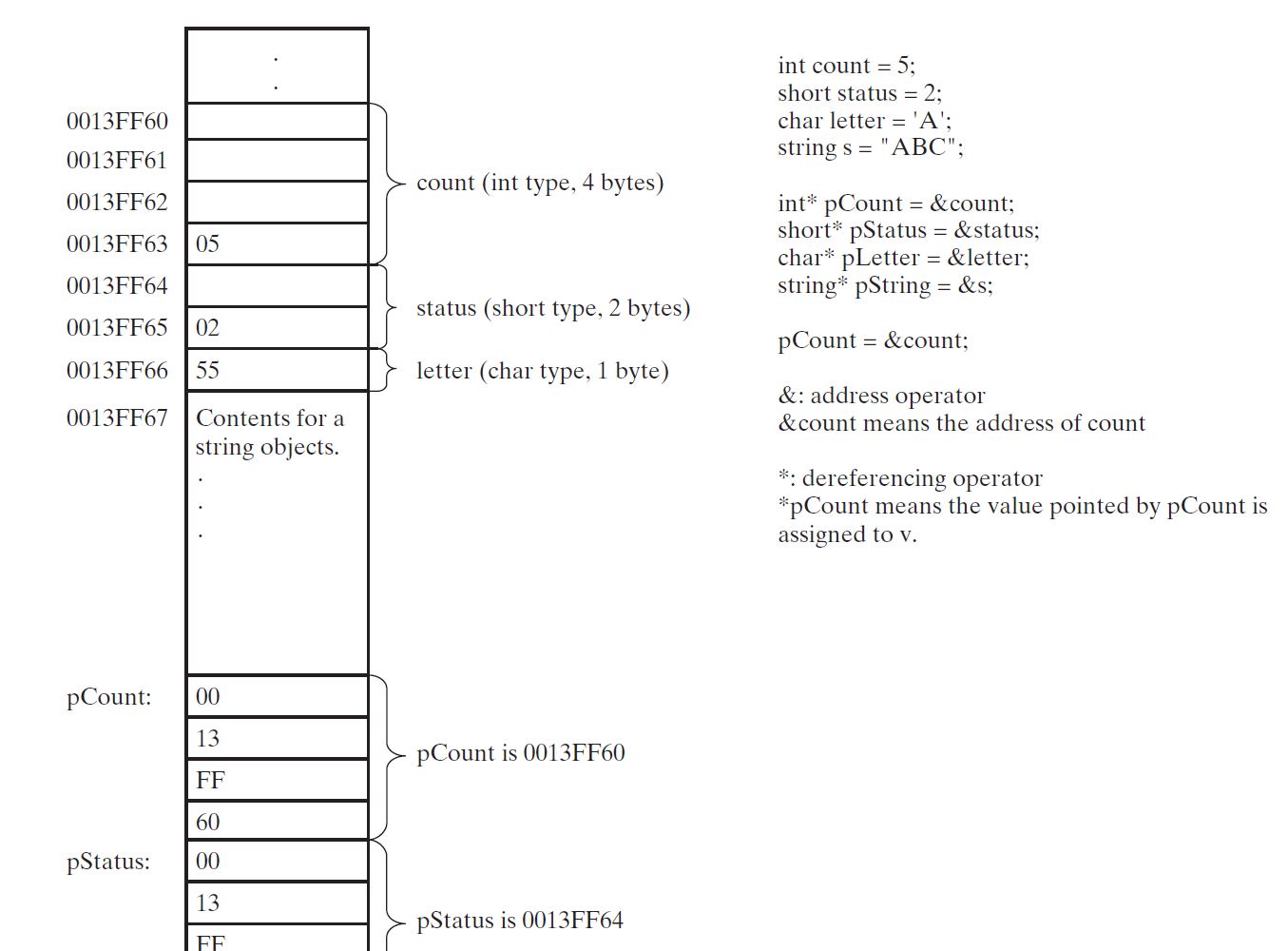
int* pCount = &count;
dereference operator:星号加指针名的意思是:这个指针所指向的值。
(*pCount)++;
指针一定要初始化,否则可能引起严重的程序错误。<iostream>中定义了NULL作为一个常量,它的值是0。
声明指针时,不要这样写:int* p1, p2;。分开单独声明。
Defining Synonymous Types Using the typedef Keyword
如同unsigned是unsigned int的同义词,我们可以使用typedef自定义同义词。语法是:
typedef existingType newType;

// 例如:
typedef int integer;

// 然后就可以用以下语句声明一个整数:
integer value = 40;
Using const with Pointers
A constant pointer points to a constant memory location, but the actual value in the memory location can be changed.
tags: cpp